
Breeding Bird Protection Regulations
In the Lower Mainland, birds, nests, and eggs are protected by the provincial Wildlife Act and the federal Migratory Birds Convention Act. Some municipalities in the Lower Mainland have policies to ensure that development complies with provincial and federal regulation. The Wildlife Act and the Migratory Birds Convention Act govern many issues related to birds and wildlife. This page will summarize the parts of these Acts that apply to land development in the Lower Mainland.
How are Breeding Birds Protected in these Regulations?
Section 34 of the Wildlife Act prohibits taking, possessing, injuring, molesting, or destroying any bird, bird egg, or protected birds nest. Section 5 of the Migratory Birds Regulation prohibits a person from destroying, damaging, or removing a bird, bird egg, or protected bird nest of a migratory bird, as defined in the Convention.
What Bird Nests are Protected?
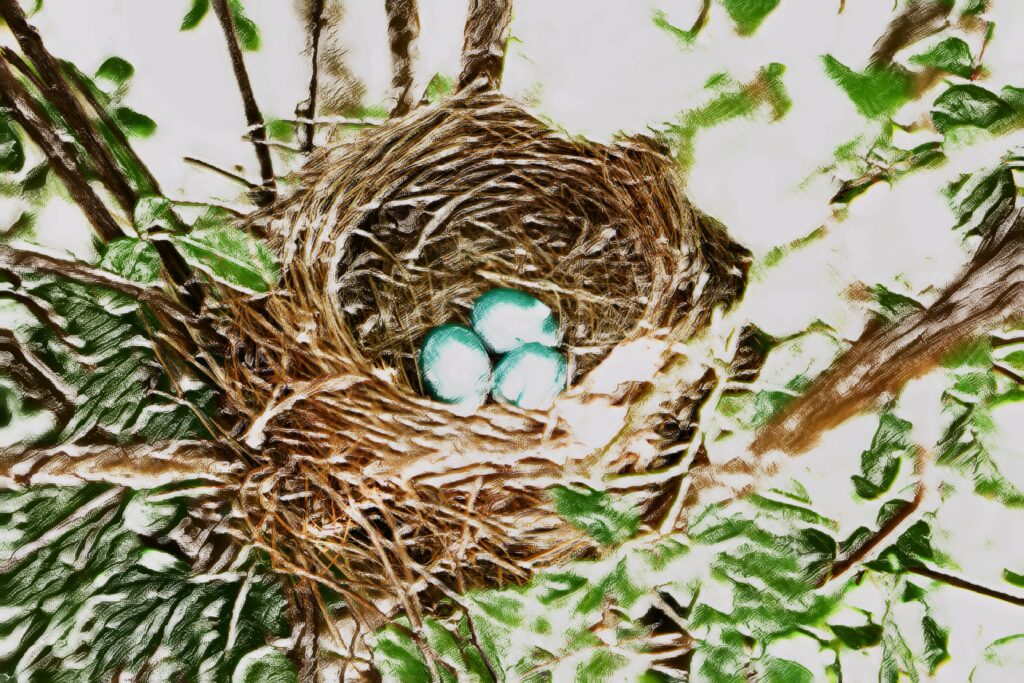
Regardless of species, any occupied nest is protected. Unoccupied nests, not containing a bird or egg, are only protected if they were built by one of the following species:
From the Wildlife Act
- Eagle, peregrine falcon, gyrfalcon, osprey, heron, or burrowing owl
From the Migratory Birds Regulation (Schedule 1)
- Great blue herons, pileated woodpeckers, great egrets, or any species in Schedule 1 of the Regulation
Note: Unoccupied heron nests are protected year-round by both federal and provincial legislation. Removal of a heron nest requires a permit/notice from both FrontCounter BC and Environment and Climate Change Canada.
How do Breeding Bird Regulations Impact Development?
Land development typically involves clearing trees or vegetation, which can inadvertently destroy birds, their eggs, or their nests. To ensure compliance with the Wildlife Act and Migratory Birds Convention Act, developers need to take action to protect breeding birds.
In the early stages of development planning, a qualified professional should identify year-round protected nests during a preliminary site assessment. If protected nests are present, buffer areas should be created where no disturbance is allowed. Consult Develop with Care for more guidelines on raptor, heron, and bird conservation during land development in BC, including species specific buffer sizes (Section 4: Table 4.1).
If possible, land clearing should be avoided when breeding bird activity is most common (see the nesting windows described below). If tree removal or vegetation clearing is required within the nesting window, developers should hire a qualified professional to conduct a breeding bird survey to identify protected nests. For more information, consult the Breeding Bird Surveys section below.
Bird Nesting Windows
Migratory Bird Nesting Windows
According to the federal government, the critical nesting window for migratory bird species in the Lower Mainland is from March 12 to August 17 (Figure 1). For species specific information, consult the BC Breeding Bird Atlas Breeding Dates.

Some municipalities in the Lower Mainland have adjusted the migratory bird nesting windows. The most common window in Lower Mainland municipalities is March 1 to August 31 (this is also the window cited in Develop with Care). Specific nesting windows for Lower Mainland municipalities are listed below:
City of Burnaby – March 31 to August 1
City of Coquitlam – March 15 to August 31
Township of Langley – March 1 to August 31
City of Maple Ridge – March 15 to August 15
City of Mission – March 1 to August 31
District of North Vancouver – March 1 to August 31
City of Port Coquitlam – March 15 to August 31
City of Surrey – March 1 to August 31
City of Vancouver – March 1 to August 15
District of West Vancouver – March 1 to August 31
Note: The information above is a work in progress and may not contain complete information for all Lower Mainland municipalities. If you have additional information or sources to share, contact us. Additionally, the information above does not authorize the destruction of birds, nests, or eggs outside of the nesting windows. Activities occurring outside the nesting window may contravene the Migratory Bird Regulation and Wildlife Act.
Raptor Nesting Windows
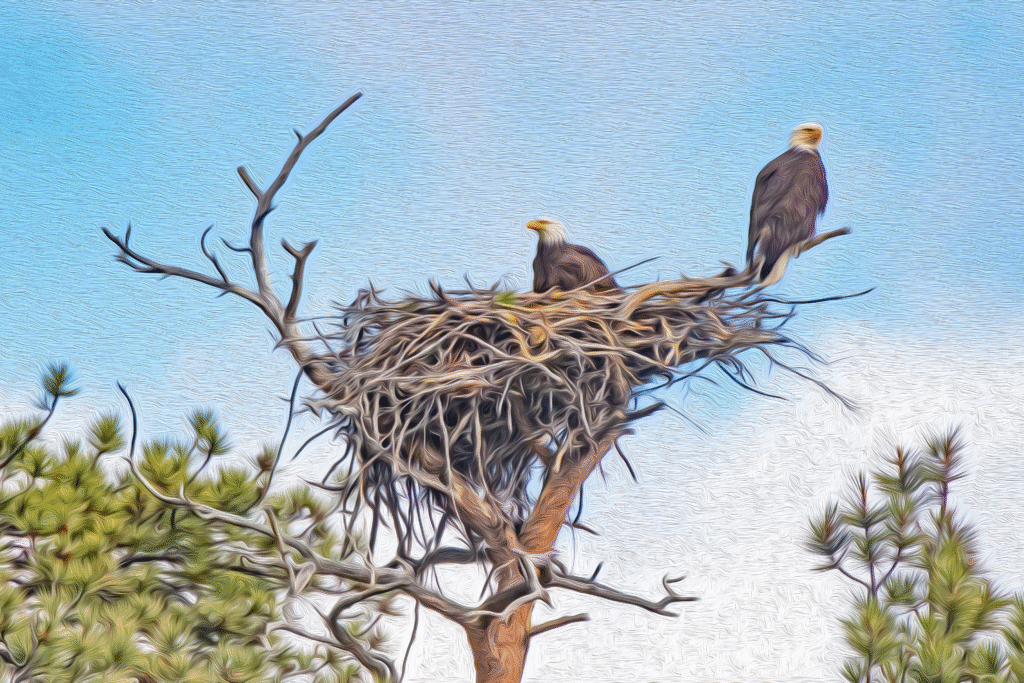
Raptors and herons have different nesting windows. These are shown in the table below, which was adapted from Develop with Care. For more information on raptor breeding seasons, consult the Guidelines for Raptor Conservation during Urban and Rural Land Development in British Columbia.

Develop with Care and the Guidelines for Raptor Conservation during Urban and Rural Land Development in British Columbia are the most commonly cited sources for raptor breeding windows in the Lower Mainland. However, some municipalities, such as the District of West Vancouver and the City of Vancouver, have adjusted the raptor nesting windows. Contact the municipality to ensure compliance with local policies and requirements.
Breeding Bird Surveys
A breeding bird survey will systematically identify any occupied nests or nesting activity in the area, using both visual inspection and behavioural assessment. The survey should aim to identify cup nests, cavity nests, and raptor activity in all possible locations. The survey should be timed to maximize the probability of identifying active nests, which includes:
- surveying in the first 3 to 4 hours after sunrise
- refraining from conducting surveys during inclement weather or windy conditions
- surveying no more than 48 hours prior to vegetation clearing
If no occupied or otherwise protected nest is found, development is allowed to proceed as planned. If an occupied nest is found, it should be protected with an adequate vegetation buffer until it is no longer occupied. The qualified professional who conducts the survey will also need to provide a summary report to document compliance with the regulations, regardless of whether a nest is found.
Municipal Reporting Requirements
In the Lower Mainland, some municipalities have additional breeding bird reporting requirements, which are summarized in the table below:
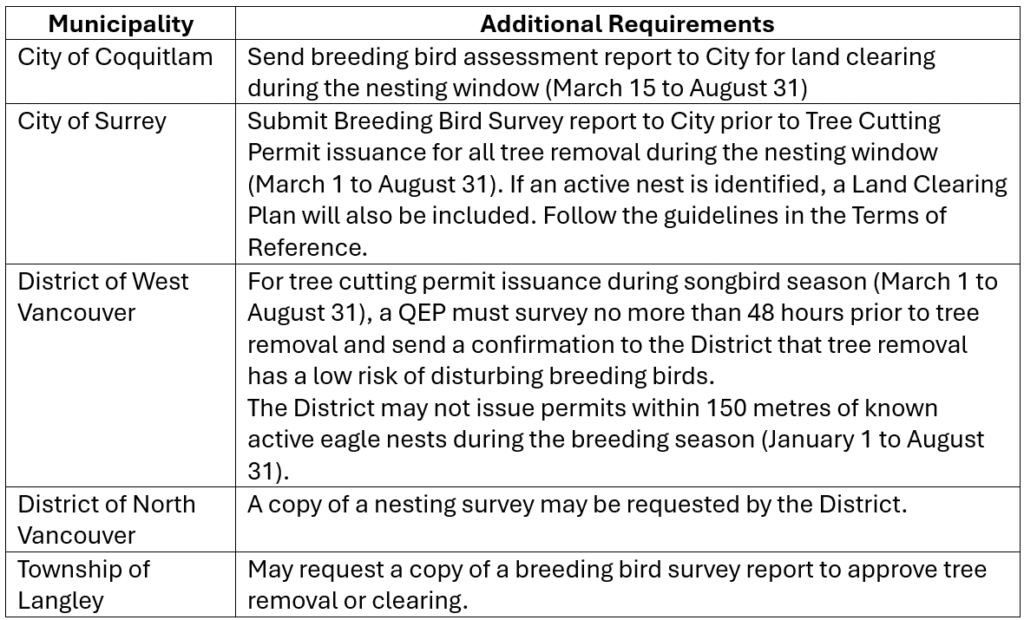
Note: this table is a work in progress and may not have complete information for all municipalities in the Lower Mainland. Contact us if you have additional sources or information to share.
Can an Unoccupied Nest be Removed?
You can remove an unoccupied nest without a permit or notice if it was built by a species other than those outlined in Schedule 1 of the Migratory Birds Regulation or Section 34(b) of the Wildlife Act.
Nests Protected by the Wildlife Act
It may be possible to obtain a permit to relocate or destroy a birds nest protected under the Wildlife Act, as per section 3(1)(d) of the Permit Regulation. A permit application must be made through FrontCounter BC and will include a compelling reason why the nest must be moved or destroyed.
Nests Protected by the Migratory Birds Regulation
An unoccupied, protected nest can be removed through the process outlined below:
- Notify Environment and Climate Change Canada (ECCC) of an unoccupied nest through the Abandoned Nest Registry
- Wait the designated waiting period for the species
- 36 months for a pileated woodpecker
- 24 months for a Great Blue Heron
- See Schedule 1 of the Regulation for wait times of other species
- If the nest remains unoccupied throughout the waiting period, it can be legally removed
If the waiting period causes a landowner demonstrable undue hardship by preventing their use of the land, it is possible to apply for a nest or nest cavity relocation permit through the Canadian Wildlife Service. Notice of an unoccupied nest to the Abandoned Nest Registry should be made prior to applying for a permit.
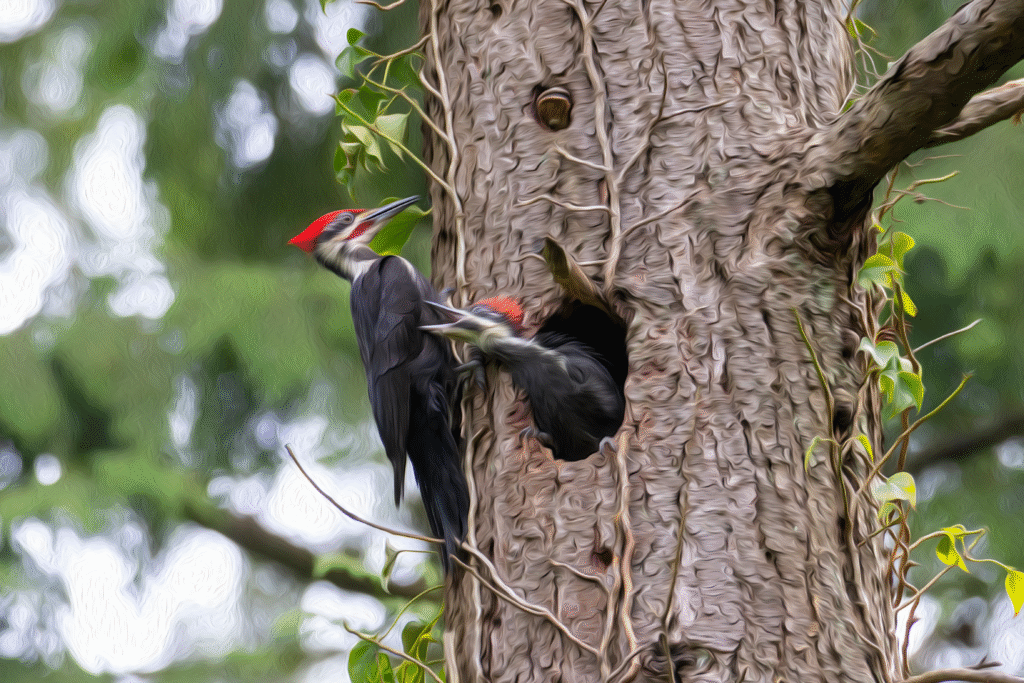
In the Lower Mainland, nest relocation permits are common for Pileated Woodpeckers, which have a 36-month waiting period. For more information on woodpecker specific information, consult our page on Pileated Woodpecker Nest Cavities.
Disclaimer: Environmental regulations change frequently. Our goal is to keep the content of this page up-to-date and accurate. If you notice inaccurate information, please contact us so we can make corrections.
Last Updated in July 2025