
Pileated Woodpecker Nest Cavities
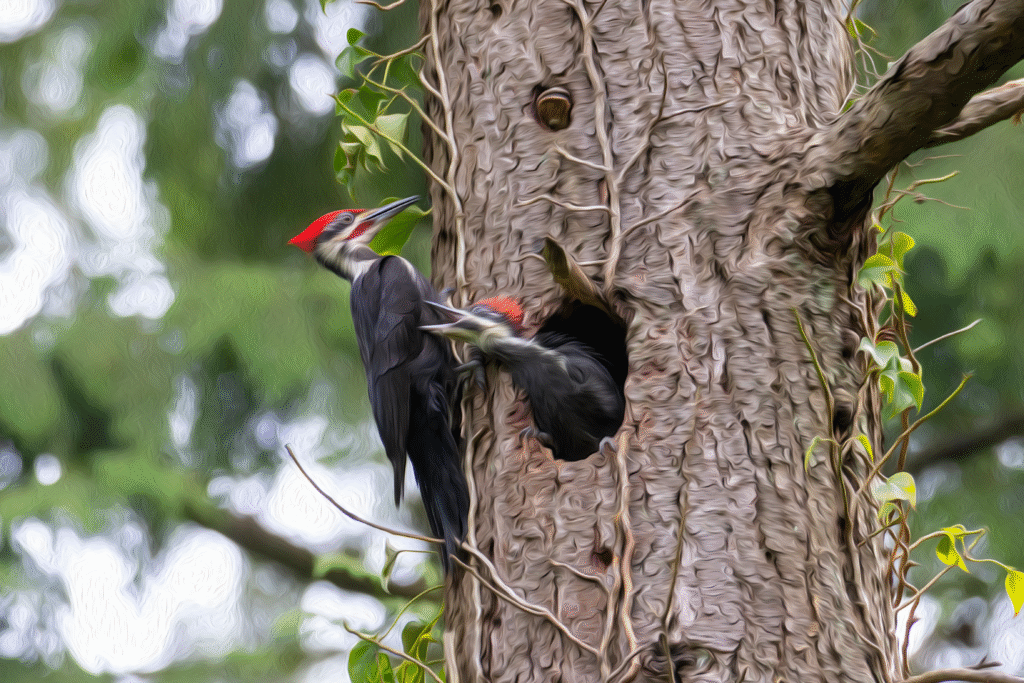
Pileated woodpeckers (Dryocopus pileatus) are a keystone species that create critical habitat for many birds and small mammals in BC. The federal Migratory Bird Regulation protects pileated woodpecker nest cavities year-round even if they are unoccupied.
Pileated Woodpecker Nest Cavity Identification
Pileated woodpeckers make three types of cavities: nest cavities, roost cavities, and feeding cavities. Only nest cavities are protected under the Migratory Bird Regulation. The table below describes the key differences between pileated woodpecker cavity types. More information can be found in the pileated woodpecker cavity identification guide.
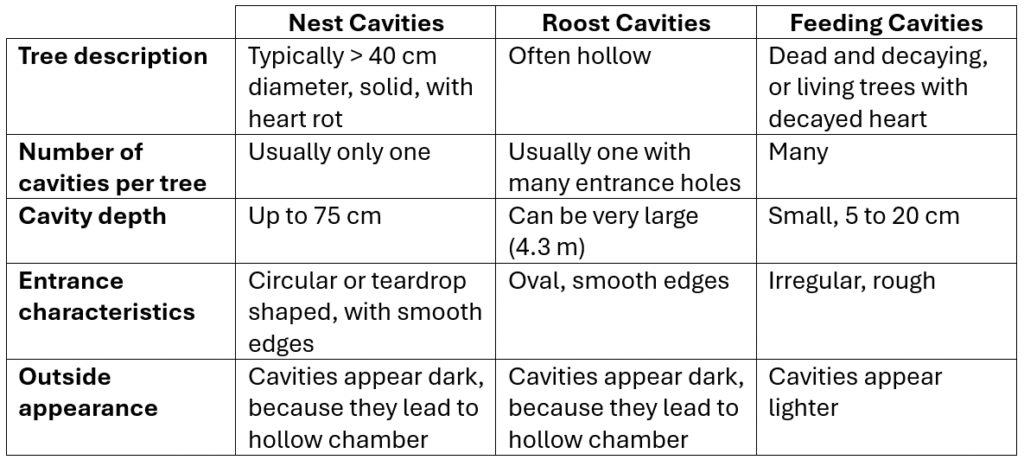
Nest Cavity Removal or Relocation Process
Pileated woodpecker nest cavities are protected by the Migratory Bird Regulation, even if they are unoccupied. To remove an unoccupied nest cavity, follow the process outlined below:
- Notify Environment and Climate Change Canada (ECCC) of an unoccupied nest cavity through the Abandoned Nest Registry
- Wait 36 months, with yearly monitoring to ensure the cavity remains unoccupied
- If the nest remains unoccupied throughout the waiting period, it can be legally removed
For land developers, the 36-month waiting period may be unfeasible. In this case, it is possible to apply for a permit under Section 71 of the Regulation to relocate an unoccupied pileated woodpecker nest cavity. For a permit to be granted, the following criteria must be met:
- the landowner must be able to demonstrate that the nest cavities are causing undue hardship by preventing their use of the land
- the nesting cavity must not have been used during the previous breeding season
- a notification of an unoccupied nest must have already been submitted through the Abandoned Nest Registry
An application to relocate a pileated woodpecker nest will include the following:
- the location and number of nest cavities
- evidence that the cavities are nesting cavities
- surveys conducted to ensure the nesting cavity was not used in the previous breeding season
- a description of how the unoccupied nesting cavity is causing damage to the use of land (explain why the cavity cannot remain in place for the 36-month waiting period)
- a description of how the nesting cavity will be relocated
An issued permit will have conditions attached. This includes required mitigation measures and relocation methods. A primary condition is that the applicant must monitor the relocated cavity for reuse by woodpeckers or other migratory bird species. Additionally, the permit only allows an unoccupied nesting cavity to be relocated outside of the April to July breeding season.
For more information consult Environment and Climate Change Canada resources or contact Forte Urban Forestry.
Nest Cavity Relocation Process
The unoccupied pileated woodpecker nesting cavity must be relocated in a way that maintains the structural integrity of the cavity and allows it to be used by pileated woodpeckers and other migratory birds. Contact Forte Urban Forestry for assistance managing a pileated woodpecker nest cavity relocation.
Disclaimer: Environmental regulations change frequently. Our goal is to keep the content of this page up-to-date and accurate. If you notice inaccurate information, please contact us so we can make corrections.
Last Updated in June 2025